

What you will learn
Make the biomass decision before the supplier decision
The guide helps operations and procurement teams frame the decision before they commit to a fuel family, a corridor, a supplier, or a trial volume.
01
Know what savings depend on
See how carbon exposure, delivered fuel cost, storage, handling, and readiness investments affect the business case.
02
Avoid proof gaps
Understand the documentation and chain-of-custody checks that have to survive verification after the fuel is used.
03
Protect production
Use kiln constraints, feedstock chemistry, moisture, ash behaviour, and logistics reliability to narrow the options.
Inside the guide
A full transition path, with real report pages inside
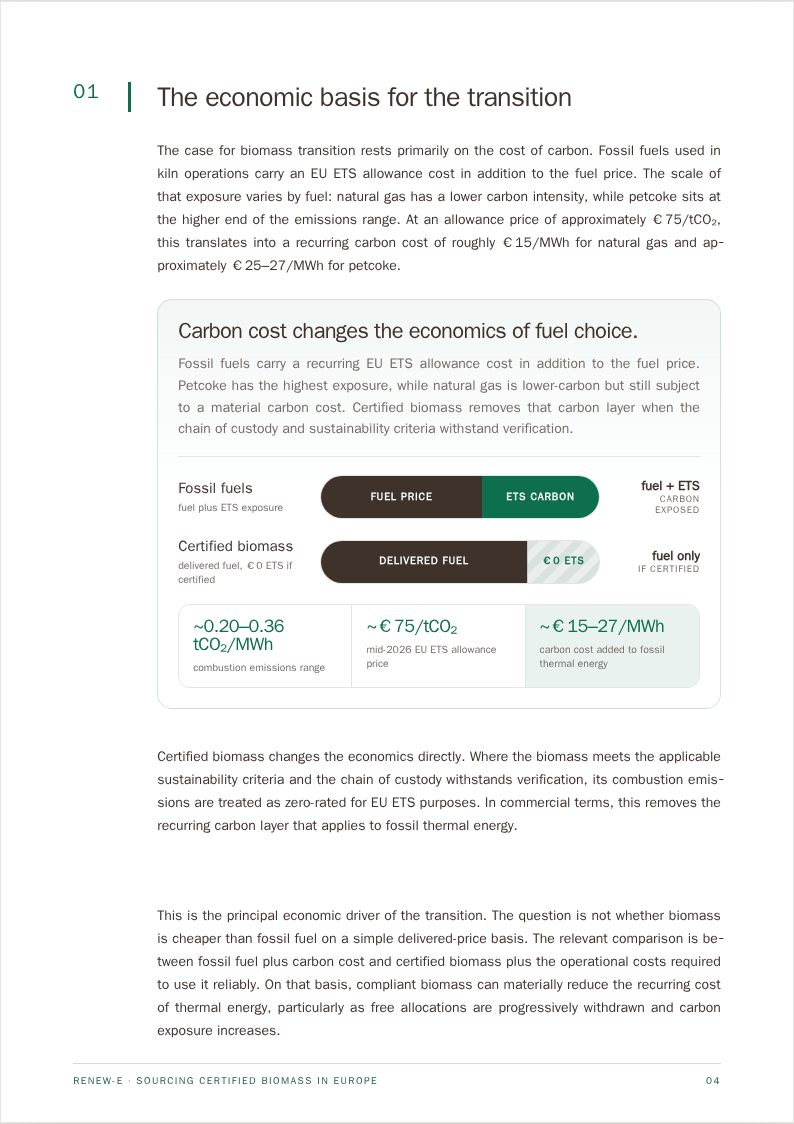
The guide follows the decision from carbon economics through certification, supply geography, kiln suitability, logistics, cost, and procurement sequencing.
The practical question is simple: can this fuel be certified, delivered, stored, and burned reliably enough to support the business case?

About
Industrial energy transition, built on operational depth.
Renew-E is led by Pierre Durand, a specialist with hands-on experience managing large-scale biomass supply chains for major European industrial groups. His background spans the full value chain — from international sourcing and port procurement to logistics coordination and kiln adaptation — across Continental Europe.
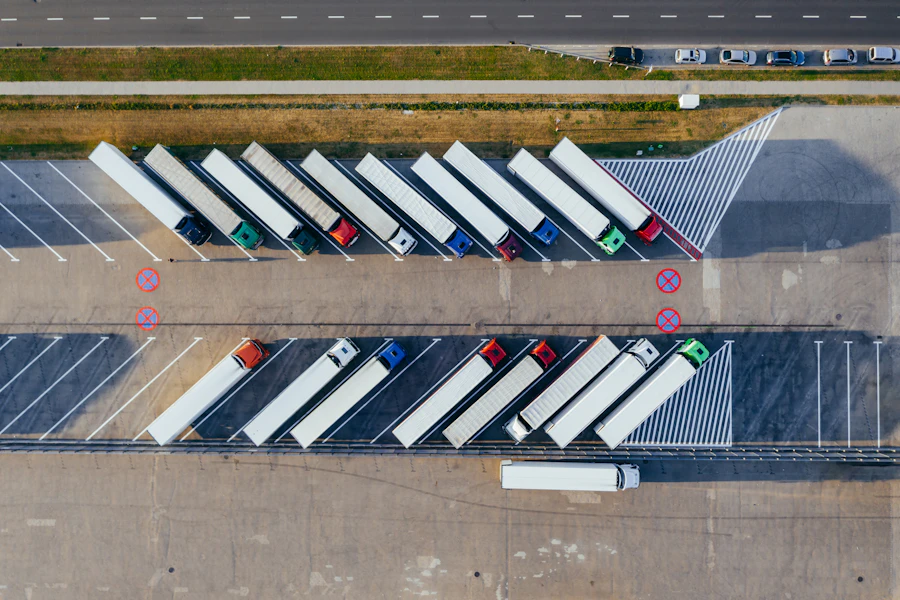
This operational depth gives Renew-E a practical edge for decisions that have to work in the plant, on the road, and at the verifier's desk.


FAQ
Common questions before downloading
Is the guide free?
Yes. Share your details and you will receive a private download link by email.
Who is it for?
Operations, procurement, and sustainability teams at lime, limestone, cement, and other kiln-dependent industrial plants.
Will Renew-E contact me?
Renew-E may follow up about your download or sourcing needs. Your details are used only for relevant guide and sourcing follow-up.
Which topics does it cover?
Fuel economics, certification proof, supply geography, kiln fit, logistics, timeline, total cost, and common failure modes.
Get the PDF